
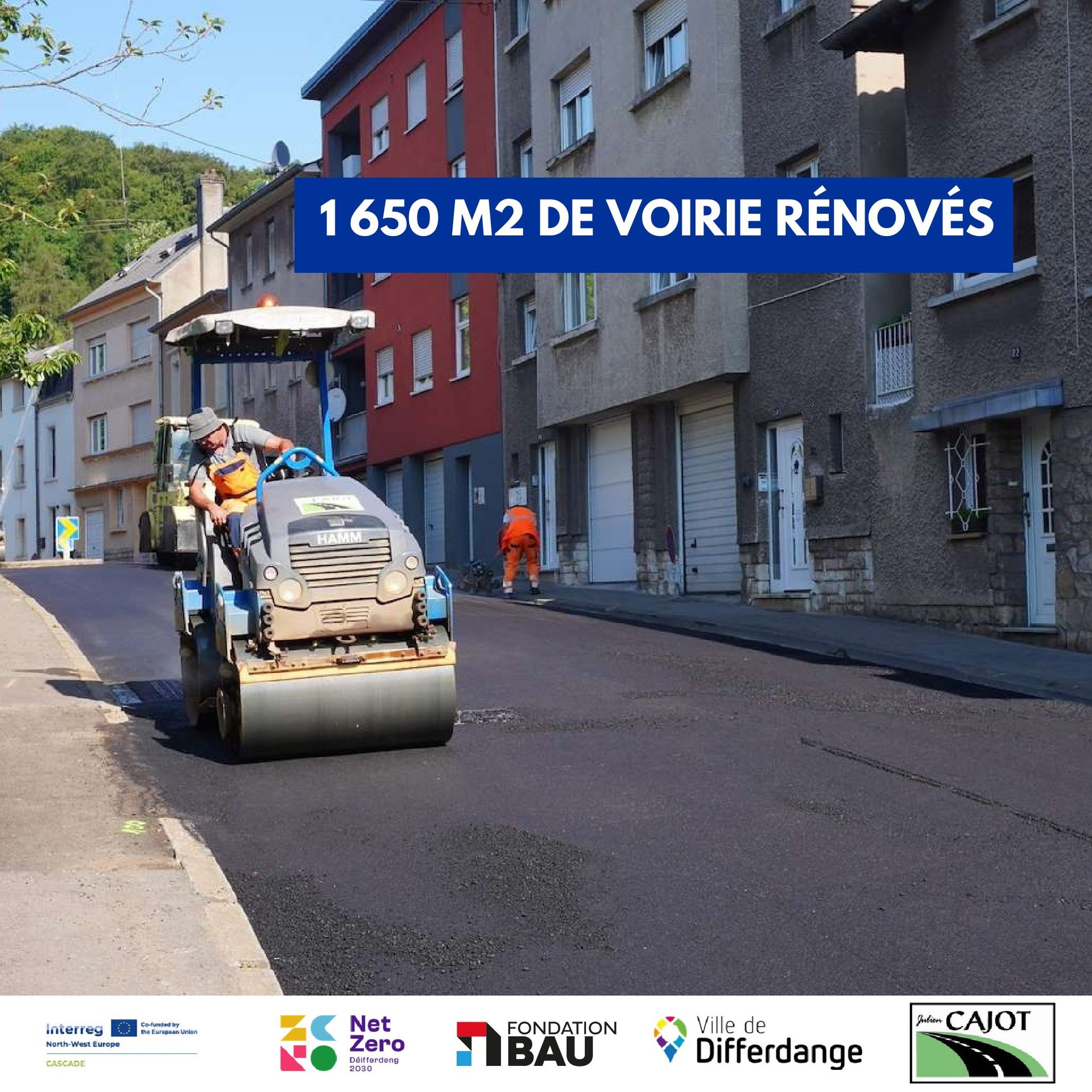
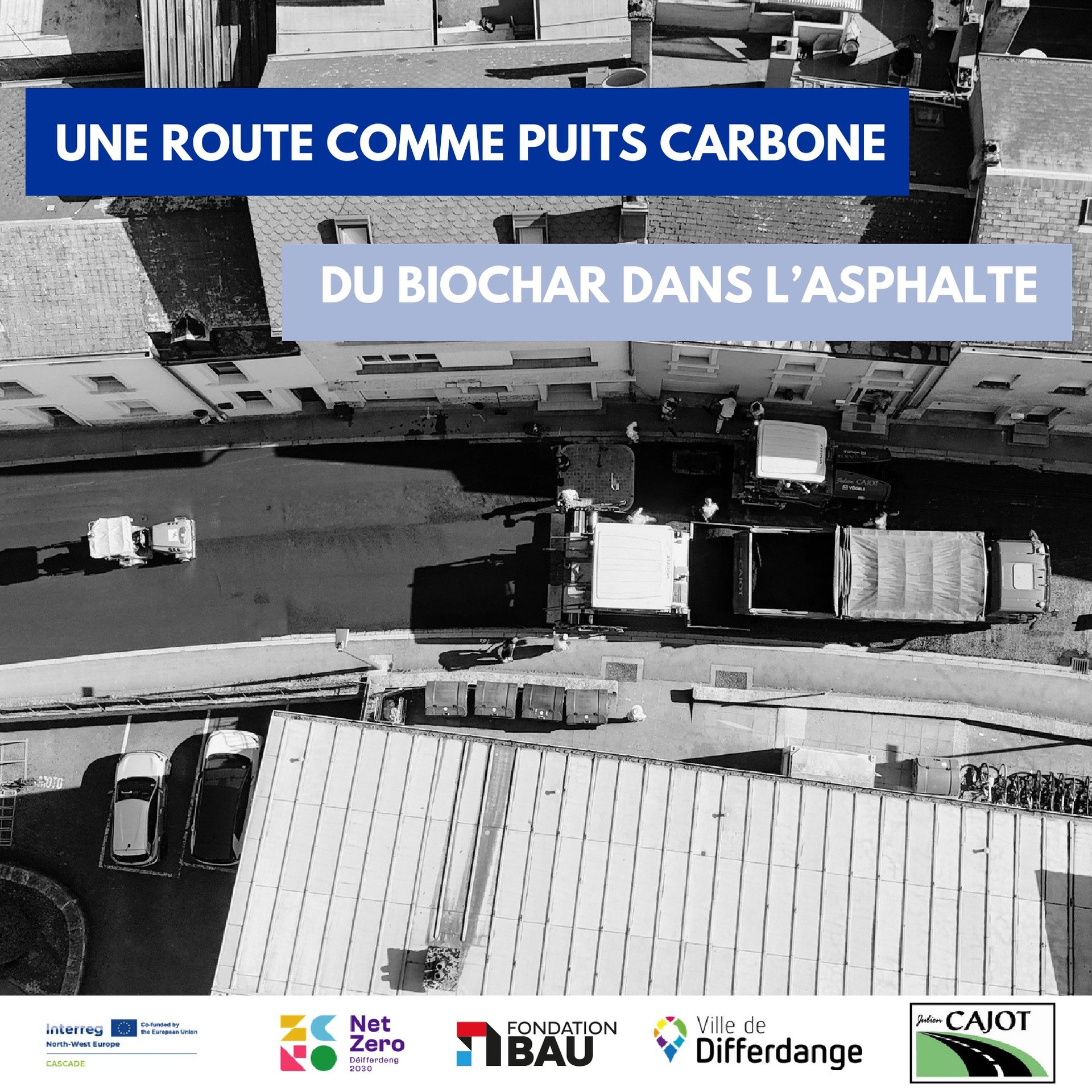
In summer 2026, the City of Differdange became the first municipality in Luxembourg to test biochar-enriched asphalt on a public road. Around 200 tonnes of asphalt containing 3% biochar were laid across 1,650 square metres of Rue de l’Hôpital.
The full-scale demonstration was developed within the Interreg North-West Europe CASCADE project through cooperation between Fondation BAU, the City of Differdange and the road-construction company Cajot. It builds on earlier experience with biochar asphalt in the Netherlands and extends the testing to a road used by cars and heavier vehicles.
Turning road infrastructure into a carbon store
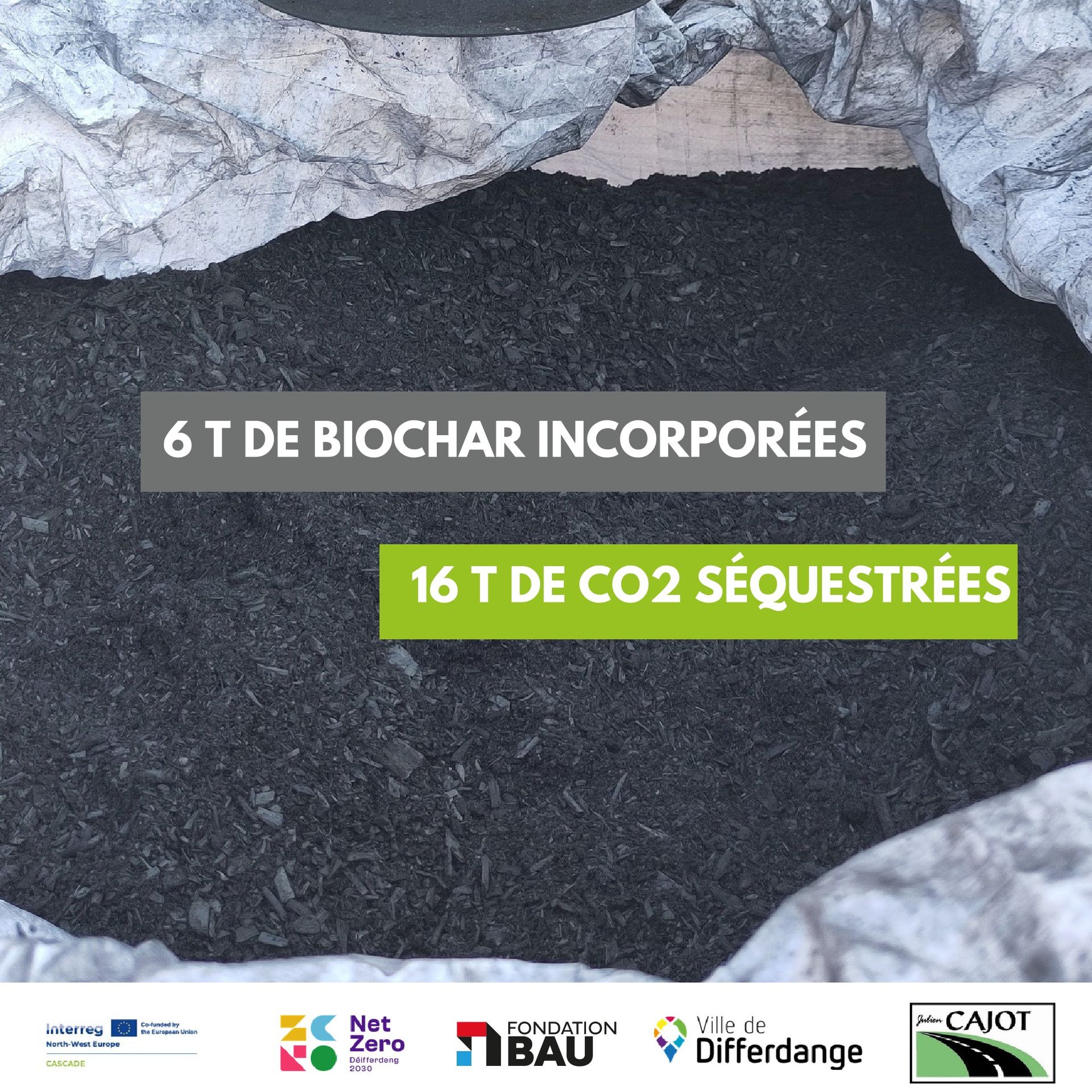
Biochar is produced by heating residual biomass under low-oxygen conditions. This process converts part of the carbon contained in the biomass into a stable form that can remain stored for long periods.
Approximately six tonnes of biochar were incorporated into the new road surface. According to the project information published by Fondation BAU, this represents around 16.56 tonnes of stored CO₂. By integrating biochar into asphalt, the pilot explores whether conventional infrastructure can contribute to carbon storage while maintaining the technical performance expected from a municipal road.
/
An open-air laboratory
The pilot will provide evidence about the production, installation and long-term behaviour of biochar-enriched asphalt. Incorporating biochar into existing asphalt-production processes required specific technical adaptations, as conventional plants were not originally designed to handle this material.
The City of Differdange plans to monitor the road after two, four and five years. The assessment will examine durability, cracking, deformation and other potential effects associated with regular traffic. These observations will help determine whether the material can be used more widely across the municipal road network.
The demonstration supports Differdange’s participation in the NetZeroCities initiative and its ambition to achieve climate neutrality by 2030. More broadly, it provides the CASCADE partnership with practical evidence about the opportunities and limitations of using biochar in construction materials.
The pilot shows how cooperation between municipalities, specialist companies and European projects can move biochar applications from small experiments to real infrastructure. Its long-term monitoring will now determine whether biochar-enriched asphalt offers a technically reliable and replicable option for lower-carbon road construction.
Further information is available from RTL Today and Neomag.